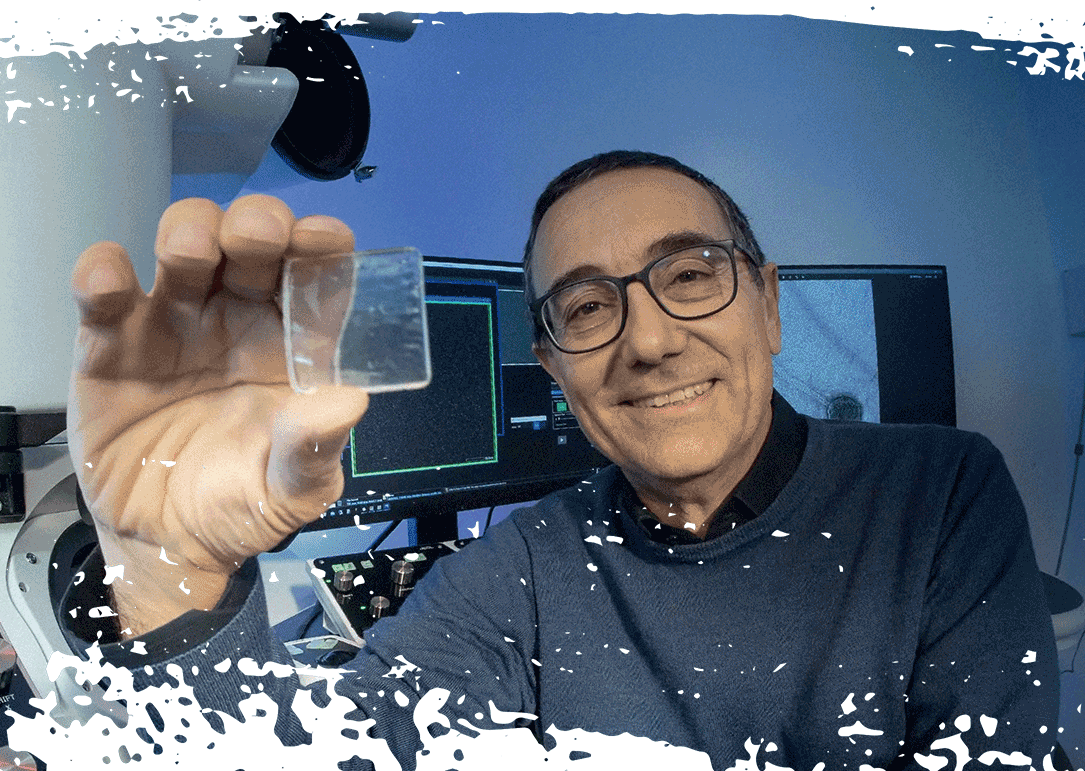
VCU innovator of the year is “Proof of Pathway” to success for physicists
Massimo Bertino, Ph.D., a professor in the Department of Physics at the VCU College of Humanities and Sciences, is the first physicist to be named Innovator of the Year in the 17-year history of the award. Bertino developed a safer, cheaper method to produce the world’s best insulators, aerogels, which are thinner, lighter, and superior to conventional materials. Dr. Bertino’s aerogel company, ThermaGEL Innovations, is working to commercialize the insulation products at a larger, more sustainable scale. The large-scale manufacturing of these advanced, energy-efficient aerogels is expected to significantly reduce greenhouse gas emissions and improve global energy efficiency and building safety, proving that transformative innovation flourishes across all scientific disciplines. “VCU, and TechTransfer and Ventures specifically, has really given us the experts and guidance to help us understand what is required to bring our aerogel materials to market,” Bertino said. “VCU has given me the freedom to realize my dreams.”
At the huge Consumer Electronics Show, a tiny innovation from VCU gets a spotlight
 Supriyo Bandyopadhyay, Ph.D., a professor in the College of Engineering’s Department of Electrical and Computer Engineering and in the College of Humanities and Sciences’ Department of Physics, is on the cutting edge of developing next-generation, low-power “nano-antennas,” which could change how many communication devices are built and used. Bandyopadhyay’s ultra-small antennas overcome the size limitations of traditional antennas by using magnetic (spin) and acoustic waves to generate radio signals. This innovative design allows for devices that are smaller, smarter, and significantly more energy-efficient. The technology was spotlighted at the Consumer Electronics Show (CES) by the Canadian startup Seta Connectivity, which is commercializing the designs. This tiny technology’s potential impact is vast, promising to revolutionize industries from medical implants that communicate without needing battery replacements to ultra-efficient on-chip wireless systems and stealth devices. The antennas can even perform “beam steering” with a single miniature unit, a feat that currently requires large, multi-antenna systems.
VCU inventor gives lawmakers a look at the virtual reality treatment that is serving veterans’ mental health
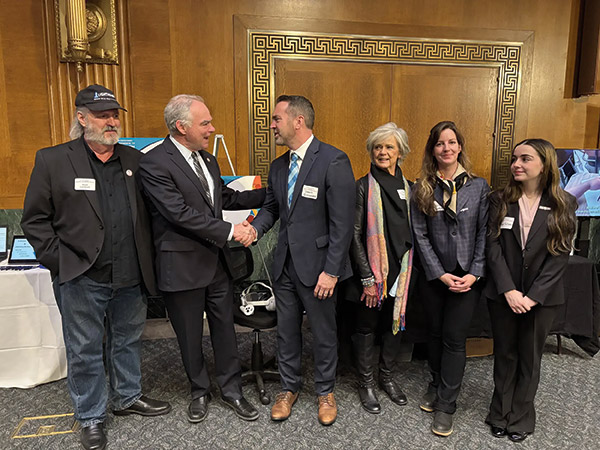 Jarrod Reisweber, Psy.D., affiliate assistant professor in VCU’s Department of Psychology in the College of Humanities and Sciences, as well as a clinical psychologist at the Central Virginia Veterans Affairs Health Care System, visited Washington D.C., to showcase The Retreat, a VR program to address mental health and substance use disorders in veterans. The Retreat, a self-directed therapy program developed with Lighthouse XR, immerses veterans in a serene, virtual lakeside cabin to teach basic concepts of Cognitive Behavioral Therapy (CBT). Dr. Reisweber demonstrated the technology to lawmakers to advocate for its use in combating the opioid crisis. The goal is to extend the therapeutic reach of practitioners, essentially turning one-hour sessions into 11 hours of self-guided practice. Data shows that veterans using the headsets are 43% more likely to complete treatment, often engaging with the program late at night, suggesting they are turning to The Retreat instead of substances. The technology is a high-tech, engaging way to complete therapy “homework,” and is already in use at multiple VA facilities.

