VCU student research
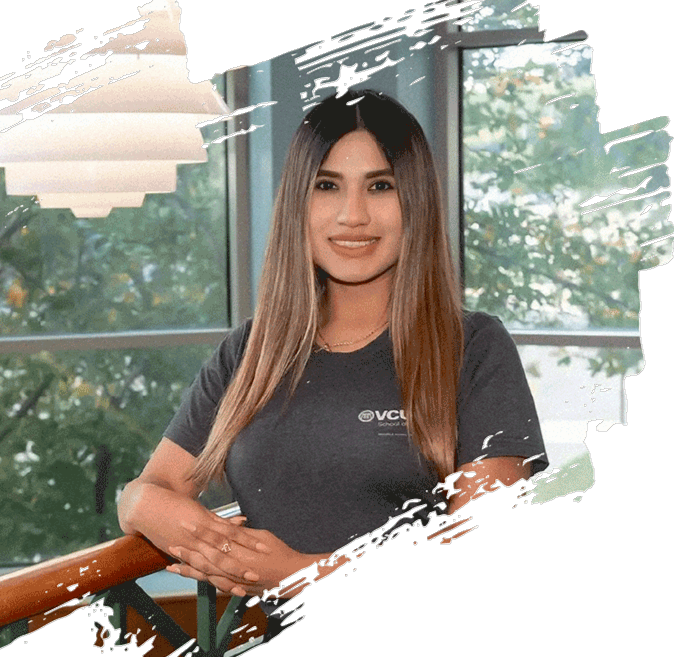
How I found my research: Josselyn Valenzuela helps pregnant mothers navigate depression
Josselyn Valenzuela, a graduate student in the VCU School of Social Work, serves as the bilingual research coordinator for the Mindful Moms Study, which studies the impact of mindfulness activities and social connectedness with people who are experiencing depression while pregnant.
Based in the School of Nursing, Valenzuela focuses on the Spanish-speaking participants in the study. Valenzuela first started working for the study as a research assistant when she was still an undergraduate in the School of Social Work. Valenzuela eventually earned her bachelor’s degree in May and remained at VCU to pursue a master’s degree in clinical social work.
How I found my research: Hannah Khan studies the connection between brain health and movement
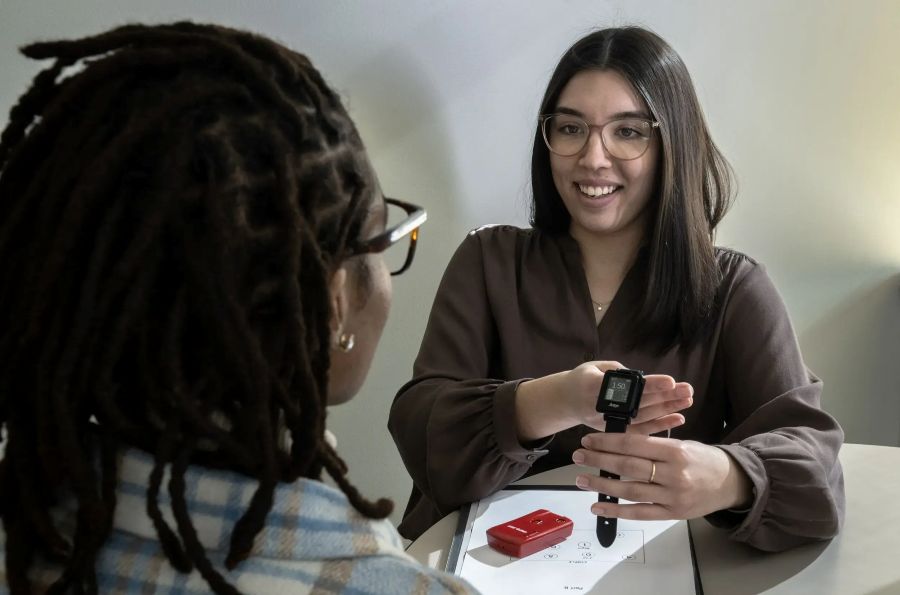 Hannah Khan’s research journey began when she was an undergraduate student in VCU’s School of Nursing and received an intriguing email about a research fellowship. Unsure of what exactly the program entailed, she applied and to her surprise, was accepted. Khan’s fellowship opened a world of opportunities and introduced her to the research process and the concept of research literacy, inspiring her to explore how, exactly, people understand research and what improvements can be made to improve the study participant experience. Her fellowship and the introduction of the concept of research literacy is what inspired her to pursue her Ph.D. in biobehavioral research in the School of Nursing.
Now serving as a research coordinator for the RAMS Study in the School of Nursing, Khan is building on what drew her into the research process by taking it a step further: she wants to tear down research barriers by forging partnerships with underserved populations in the Richmond community. “This research is vital for improving health outcomes and emphasizes community engagement to include historically underserved populations in research,” said Khan.
The work the RAMS Study Team and Khan are doing is helping build a better tomorrow by equipping all older adults with the tools necessary to detect and manage cognitive decline in its earliest stages.
How I found my research: Fosua Adu-Gyamfi learns from undergrad experiences at both VCU and the National Cancer Institute
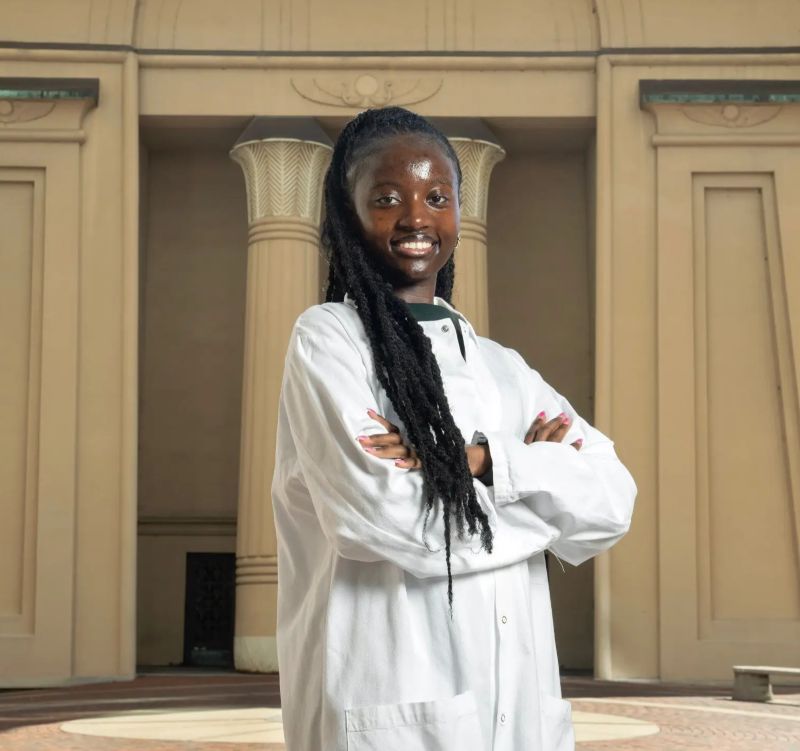 Fosua Adu-Gyamfi, a senior biology major with a chemistry minor in the College of Humanities and Sciences, found her research path through an unexpected email. Initially just looking to boost her résumé, she replied to an email from a Ph.D. student seeking an undergraduate assistant. This led her to a pivotal role in the lab of Dr. M. Imad Damaj in the Department of Pharmacology and Toxicology, where she now serves as an undergraduate research assistant.
Her research focuses on alcohol use disorder, specifically evaluating the role of Diacylglycerol-beta on alcohol consumption in mice. This VCU experience, combined with guidance from the Maximizing Access to Research Careers (MARC) program, became a launchpad for major opportunities, including a summer cancer research internship at the National Cancer Institute and presentations at prominent national research conferences. Adu-Gyamfi discovered a deep fulfillment in the research process, embracing its potential to advance the world “one question at a time.”
How I found my research: By studying grief, Diane Diaz hopes to transform ‘pain into purpose’
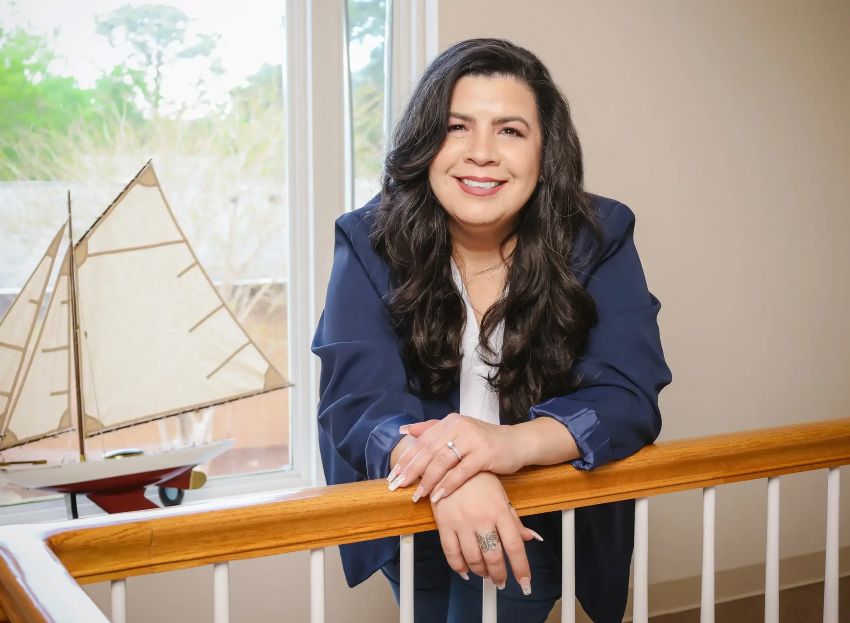 Diane Diaz’s research journey is deeply personal, rooted in her experiences with grief, cultural displacement and military life. A doctoral student in the VCU School of Education, specializing in counselor education and supervision, Diaz was inspired to pursue this work after her personal loss and witnessing the systemic failure of the military to provide adequate grief support.
Her academic focus explores the intersection of “grief-pain” and spirituality among BIPOC military service women. This line of inquiry, which she considers her “advocacy in action,” aims to understand how these women cope with stress and loss in a historically patriarchal system. Diaz believes her work is crucial because it can shape strength-based, culturally responsive interventions and influence policy systems that have long marginalized women of color in uniform. For her, research is a “communal, spiritual, and liberating” process that transforms personal pain into purposeful action.